


The eyewear industry is notoriously opaque. Consumers are routinely presented with identical-looking frames that range in price from twenty dollars to over six hundred dollars, with retail staff rarely able to explain the underlying discrepancy. From our experience manufacturing optical frames and sunglasses for global distribution at Lonsy Eyewear, the disparity in price is almost entirely dictated by the supply chain of the specific eye glasses shops you choose to patronize. We see commercial buyers and retail consumers alike fall victim to generic, injection-molded plastics masquerading as premium eyewear simply because of heavy marketing expenditures.

In most professional situations, finding the right retailer means understanding what happens before the frames ever hit the display shelf. The best eye glasses shops do not just sell vision correction; they sell rigorously engineered materials—from hypoallergenic titanium to hand-polished cellulose acetate. In this comprehensive industry guide, we take a definitive position on how to evaluate optical retailers. We will analyze the operational models of the top 10 eye glasses shops, dissect the manufacturing realities of the frames they carry, and help you determine whether upgrading your eyewear investment is actually worth it.
Quick Answer: Selecting the Right Eye Glasses Shops
When evaluating the vast landscape of eye glasses shops, your purchasing decision should be driven by material quality and prescription complexity, not brand hype. Here is our direct assessment:
- For Commercial Users & Wholesale Buyers: Partner directly with a verified manufacturer (like Lonsy Eyewear) to bypass the excessive markups of domestic distributors. Opt for high-margin, hand-crafted Acetate eyeglasses to build your retail authority.
- For Heavy-Duty Applications & High Prescriptions: Independent optical boutiques are superior to mass-market chains. They offer precise, specialized lens crafting that thick, high-index prescriptions require.
- For Beginners & Budget Buyers: Direct-to-Consumer (DTC) online eye glasses shops provide the best entry-level value, though you must heavily scrutinize their frame materials to avoid brittle, cheap plastics.
We recommend entirely avoiding mall kiosks and fast-fashion retailers for prescription eyewear; their frames lack the structural integrity required to securely hold corrective lenses over time.
Table of Contents
- What Makes the Best Eye Glasses Shops Stand Out?
- How the Optical Supply Chain Works
- The Top 10 Categories of Eye Glasses Shops
- Benefits and Limitations of Retail Models
- Who Should Use Premium Shops
- Common Mistakes When Buying
- Expert Buying Considerations
- Summary and Comparison Tables
- Expert Recommendation: Partnering with Lonsy Eyewear
- Frequently Asked Questions (FAQ)
What Makes the Best Eye Glasses Shops Stand Out?
Premium eye glasses shops are defined by their curation of materials and their optical expertise. A generic retailer focuses on fast turnover, stocking frames made from basic injection-molded plastics. These frames are brittle, cannot be easily adjusted with heat, and lose their finish rapidly. In contrast, an elite optical shop sources frames constructed from superior substrates.
For instance, they will prioritize collections featuring handmade cellulose acetate, which is hypoallergenic, durable, and retains a deep, rich luster. They will also stock Metal Sunglasses and optical frames utilizing surgical-grade stainless steel or titanium. The true hallmark of a top-tier shop is the presence of licensed opticians who understand how the geometry of a frame interacts with the physics of a specific optical lens.
How the Optical Supply Chain Works
To evaluate eye glasses shops effectively, you must understand how they acquire their inventory. The vast majority of global eyewear brands are produced by a handful of massive conglomerates. These conglomerates dictate the retail prices across major chains. This is why you often see a $400 frame that is functionally identical to a $100 frame.
Independent shops and disruptive DTC brands operate differently. They bypass the conglomerates and source directly from specialized manufacturing facilities. By working with dedicated factories, these shops can offer superior components—such as five-barrel OBE hinges and premium TR90 Sunglasses designed for extreme flexibility—at highly competitive consumer prices.
The Top 10 Categories of Eye Glasses Shops
Rather than listing subjective brand names that fluctuate in quality, we have categorized the market into the top 10 functional models of eye glasses shops. This structural breakdown helps you identify where to spend your capital based on your specific needs.
- Independent Optical Boutiques: The gold standard for personalized service. These shops curate bespoke collections, offering niche brands that utilize premium acetate and titanium. Ideal for complex prescriptions.
- Direct-to-Consumer (DTC) Online Titans: Shops that disrupted the market by manufacturing their own frames and selling them directly online. Excellent for modern aesthetics at mid-tier pricing.
- Big-Box Optical Centers: Located inside major warehouse clubs. They offer unparalleled convenience and low prices on generic frames and contact lenses, but suffer from limited high-end material selection.
- Luxury Fashion House Retailers: Flagship stores selling eyewear as an accessory to their apparel lines. You are paying a 70% premium for the logo on the temple, not necessarily for superior optical engineering.
- Eco-Conscious Specialty Shops: A rapidly growing sector focusing on sustainable materials. These shops excel in stocking biodegradable acetates and Full wood sunglasses.
- Sports & Performance Opticals: Retailers dedicated to athletic vision. They stock impact-resistant polycarbonate lenses and specialized wrap-around frames like PC sunglasses- Metal Hinge configurations.
- Digital Protection Specialists: Shops catering exclusively to the modern office worker, focusing heavily on Anti-blue Eyeglasses Unisex and anti-fatigue lens technologies.
- Discount Chain Retailers: High-volume, low-margin shops. Best for buying emergency backup pairs, but their frames are typically injection-molded and difficult to adjust properly.
- Vintage & Deadstock Eyewear Shops: Niche retailers sourcing unworn frames from past decades. Excellent for unique aesthetics, though the older plastics can sometimes become brittle.
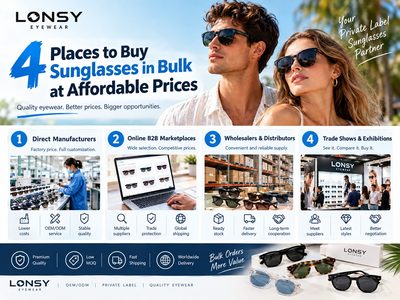
- Wholesale Factory Outlets: Direct access points for commercial buyers. Shops and platforms that allow retail owners to purchase high-quality inventory directly from manufacturers, bypassing distributors entirely.
Benefits and Limitations of Retail Models
The commercial benefit of purchasing from independent eye glasses shops is absolute precision. A licensed optician takes precise pupillary distance (PD) and ocular center measurements, ensuring your high-index lenses do not induce prismatic distortion. For commercial users opening their own retail spaces, positioning yourself as an independent boutique allows you to command higher margins by stocking superior, non-conglomerate frames.
The limitations lie heavily in the online DTC sector. In our testing, buying complex progressive lenses from online eye glasses shops frequently results in high return rates. Without a physical optician to measure the exact segment height on your specific face, progressive lenses are functionally useless. Online shops are brilliant for single-vision prescriptions, but they hit a hard limitation when dealing with multifocal requirements.
Who Should Use Premium Shops (And Who Does Not Need Them)
Who Should Use Premium Shops: We recommend independent, premium optical shops for individuals with astigmatism, high myopia (nearsightedness over -4.00), or those requiring progressive lenses. Furthermore, if you wear your glasses 16 hours a day, upgrading to a premium, hand-adjusted acetate frame is a mandatory investment in your daily physical comfort.
Who Does Not Need Them: For beginners who only need mild reading glasses (+1.00 or +1.50) or those looking for trendy, non-prescription fashion frames to wear occasionally, spending $300 at a luxury boutique is unnecessary. A mid-tier online retailer or a specialized vendor for Anti-blue eyeglasses – Women will perfectly satisfy your functional needs at a fraction of the cost.
Common Mistakes When Buying from Eye Glasses Shops
Expert Insight: The most catastrophic mistake we see consumers and retail buyers make is conflating a recognizable brand name with structural quality.
Many famous fashion brands license their names to massive eyewear conglomerates. The resulting frames are often mass-produced using cheap, cold-stamped plastics, yet sold at luxury price points. Always judge the frame by its hardware. Look for real rivets securing the hinges (not just glued-on decorative shields), smooth, wire-core acetate temples, and sturdy barrel hinges. Do not pay a premium for a logo if the hardware is fundamentally flawed.
Expert Buying Considerations
Whether you are a consumer buying one pair or a commercial buyer stocking a new retail store, apply these rigorous standards when evaluating eye glasses shops:
- Material Transparency: Does the shop specify if the frame is TR90, Cellulose Acetate, or basic Polycarbonate? If they only say “plastic,” walk away.
- Lens Coating Warranties: Anti-reflective (AR) coatings are prone to crazing (micro-cracking) if applied poorly. Demand at least a one-year warranty on lens treatments.
- Adjustment Policies: Acetate frames will stretch over time depending on your body heat and usage. The best shops offer lifetime free adjustments and ultrasonic cleanings.
- Wholesale Sourcing: If you are a B2B buyer, evaluate whether the shop’s supplier offers Acetate sunglasses and optical frames that can be custom-branded (OEM) to build your own store’s equity.
Summary and Comparison Tables
Quick Summary Table: Core Eyewear Materials
| Material Type | Primary Characteristics | Best Use Case |
|---|---|---|
| Cellulose Acetate | Hypoallergenic, rich colors, heat-adjustable, durable. | Premium everyday optical frames and luxury sunglasses. |
| TR90 (Memory Plastic) | Ultra-lightweight, highly flexible, impact-resistant. | Sports eyewear, active lifestyles, children’s frames. |
| Titanium | Corrosion-resistant, extremely strong, hypoallergenic, light. | Minimalist designs, heavy-duty applications, sensitive skin. |
| Stainless Steel | Strong, easily shaped, cost-effective metal. | Mid-tier metal frames and aviator styles. |
Comparison Table: Online vs. Brick-and-Mortar Shops
| Feature | Online DTC Shops | Independent Brick-and-Mortar |
|---|---|---|
| Price Point | Low to Medium (Highly competitive) | Medium to High (Includes service premium) |
| Prescription Accuracy | Good for single-vision; poor for progressives. | Exceptional; precise ocular measurements taken in-person. |
| Frame Adjustments | Requires user to bend frames at home (risky). | Professional heat-adjustment by licensed opticians. |
| Try-On Experience | Virtual AR or mail-in home try-on programs. | Immediate physical feel of weight and material quality. |
Pros and Cons of Boutique Eye Glasses Shops
| Pros (Advantages) | Cons (Limitations) |
|---|---|
| Access to unique, high-quality independent eyewear brands. | Significantly higher upfront cost compared to chain stores. |
| Expert optical staff to troubleshoot complex vision issues. | Smaller inventory selection physically in stock. |
| Frames are meticulously adjusted to fit your exact facial asymmetry. | Longer wait times if custom frames need to be ordered. |
| Superior after-care, including repairs and deep cleanings. | May not accept all low-tier vision insurance plans. |
Expert Recommendation: Partnering with Lonsy Eyewear
For commercial users, retail owners, and B2B distributors, the secret to running successful eye glasses shops is controlling your supply chain. Relying on massive distributors destroys your profit margins and leaves you selling the exact same frames as your competitors. We strongly recommend upgrading your business model by sourcing directly from a verified, professional manufacturer.

Lonsy Eyewear – Professional Eyewear Manufacturer
Lonsy is an experienced eyewear factory focused on high-quality and handmade sunglasses and optical frames. Materials we use include acetate, metal, and wood. Making sure that our customers can easily get wholesale sunglasses and eyeglasses, we have created a complete eyewear collection.
- Extensive Inventory: Acetate, metal, wooden, and eco-friendly bamboo frames.
- Ready to Ship: Over 500+ models ready in stock to choose from.
- Unbeatable Value: All glasses are at wholesale price, but with excellent quality.
- Brand Building: Custom glasses design and custom logo integration (OEM/ODM) are no problem.
Explore Lonsy Eyewear Manufacturing
By partnering with Lonsy Eyewear, you bypass the conglomerate markup, ensuring your retail shop offers superior structural integrity—from rugged metal hinges to rich acetate colorways—while maximizing your commercial profitability.
Frequently Asked Questions (FAQ)
Are cheap frames from online eye glasses shops bad for my eyes?
The frame itself will not harm your eyes, but the lenses might. Cheap online retailers sometimes cut corners on lens surfacing, leading to optical aberrations that can cause severe eye strain and headaches. Furthermore, brittle plastic frames break easily, presenting a physical hazard if shattered.
Why do some optical shops charge so much for lenses?
Premium optical shops utilize high-index digital free-form lenses. Unlike traditional stock lenses, these are digitally surfaced to widen the “sweet spot” of your vision and reduce peripheral distortion. You are paying for advanced optical engineering, superior anti-reflective coatings, and the expertise of the optician fitting them.
Can I put prescription lenses in any sunglasses?
No. In most professional situations, opticians will reject cheap, injection-molded sunglasses because they will snap when heated to insert the lens. You must ensure the frames are “optical-ready,” meaning they are made of sturdy materials like acetate or metal, and feature a “V-groove” deep enough to hold a prescription lens securely.
Authoritative Industry References
To ensure our manufacturing standards and consumer advice align with rigorous medical and industrial protocols, we reference the following authorities:
- International Organization for Standardization (ISO): Defining the physical and optical requirements for ophthalmic optics and spectacle frames (ISO 12870). Visit ISO Standards
- The Vision Council: The premier non-profit trade association representing the manufacturers and suppliers of the optical industry, providing critical data on eyewear market trends. Visit The Vision Council
- American Academy of Ophthalmology (AAO): Medical guidelines ensuring consumer safety regarding proper lens prescriptions, UV protection standards, and digital eye strain mitigation. Visit AAO




Recent Comments